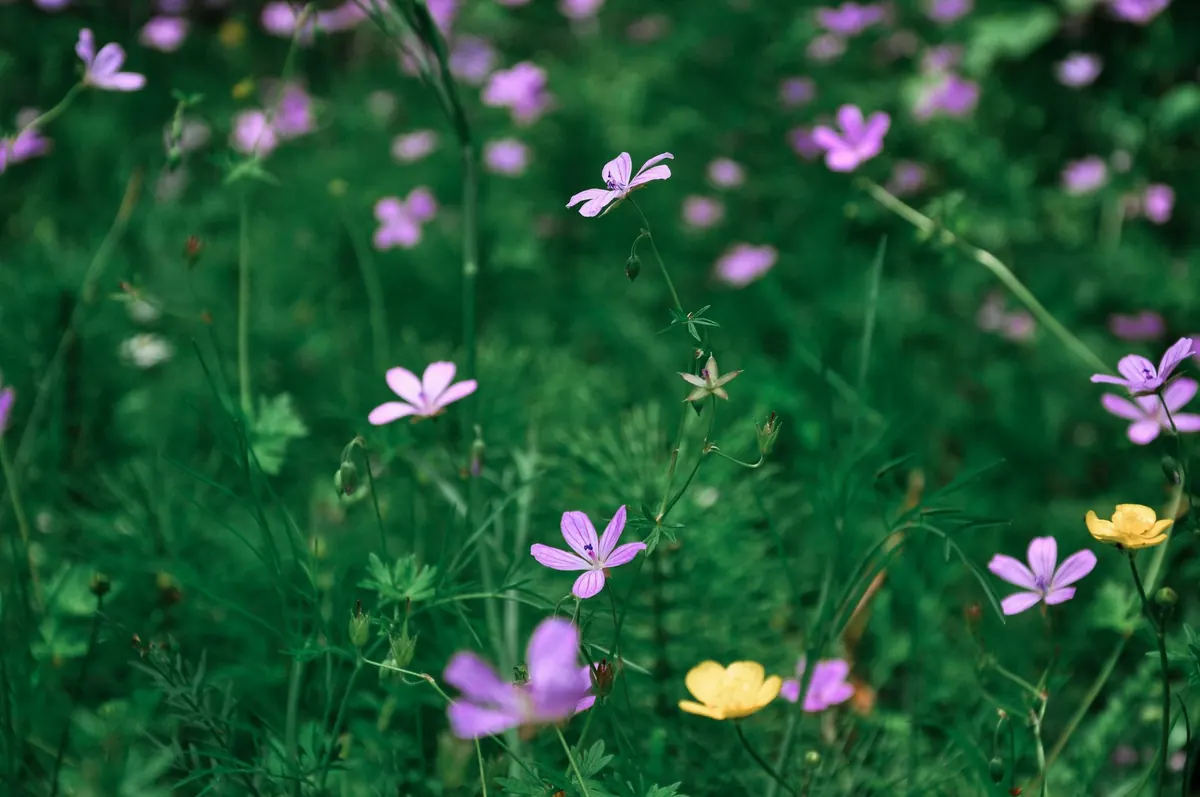
A lawn is a hard habit to break. It gets fed, watered, mown to within an inch of its life, and in return it gives you a green rectangle that supports almost nothing. Turning it into a wildflower meadow is not simply a matter of scattering seed and hoping. The grass you already have is tough, well fed and quick to smother anything sown into it. The trick is to change the rules: take the fertility down, open the ground up, and work with plants that actually prefer poor soil.
Start by reading the site
Before you touch a spade, work out what you are dealing with. Most meadow wildflowers want six hours of direct sun or more, so a lawn shaded by fence panels and a north wall will always struggle. Dig a spade-depth hole and look at the soil. Dark, crumbly, worm-filled earth means years of feeding and a longer job ahead. Thin, pale, stony ground is a gift, because it is already half-way to meadow.
Check drainage too. If the hole fills with water in winter, either choose damp-loving plants such as ragged robin and meadowsweet, or pick a different patch. And be honest about size: a small square you will actually manage beats a large one you abandon by August.
Step 1: take the fertility down
Fertility is the enemy. Rich soil grows big, floppy grass that flattens everything else. So stop feeding — no lawn fertiliser, no manure, no compost, no soil improver. Stop watering in dry spells as well; you are not trying to keep grass green, you are trying to slow it down.
Then start mowing for removal. Cut at roughly 5–7 cm and collect the clippings every single time. Do not let them lie. Every barrow-load is nutrients leaving the site, which is exactly what you want. If you can spend a full growing season doing nothing but this, your chances of success improve enormously.
Step 2: get rid of the grass
You have three realistic routes, and they all take time.
- Smother it. Lay thick cardboard weighted with bricks, or cover the ground with black polythene. Three to six months over spring and summer will kill most grass and leave the soil structure undisturbed beneath.
- Strip it. Hire a turf cutter, or slice off the top 5 cm with a spade and stack the turf upside down in a corner. It rots into decent loam you can use elsewhere. You lose the weed seed bank along with the grass, which is often a bonus.
- Spray it off. Some gardeners use glyphosate, then repeat if regrowth appears. If you take this route, follow the label exactly, respect the interval before sowing, and keep it well away from ponds and desirable plants.
Whichever you choose, resist the urge to rotavate deeply. Digging brings long-buried weed seeds to the surface and gives you a flush of chickweed, thistle and dock just when you want flowers. And do not import topsoil — it will be too rich, and it may bring in weed seed.
Step 3: choose seed that suits your ground
Buy a native British wildflower mix from a supplier who asks about your soil and your light levels. Two types are worth knowing:
- A perennial meadow mix for the long term, usually built around fine grasses such as sheep's fescue, crested dogstail and common bent, with flowers like ox-eye daisy, knapweed, birdsfoot trefoil, yarrow and meadow buttercup.
- A cornfield annual mix — poppies, cornflower, corn marigold — which gives colour in the first summer but fades unless the soil is disturbed each year.
A typical meadow mix goes on at around 4–5 g per square metre, so check the rate on your packet. Do include yellow rattle. It is a native annual that parasitises grass roots, thinning the grass and opening space for flowers. Sow it in autumn with your mix and let it set seed before you cut. It is the single most useful plant in this whole process.
Step 4: sow at the right time, in the right way
Late August to mid-October is the best window: the soil is still warm, rain is more likely, and the seed gets a natural cold spell over winter. March and April also work, but you will spend more of the first summer weeding.
- Clear obvious weeds and rake the surface to a fine, firm tilth — crumbs, not clods.
- Mix the seed with dry sand or fine compost, roughly ten parts sand to one part seed, so it spreads evenly.
- Divide the area in half. Sow one half walking north to south, the other east to west, overlapping slightly at the edges.
- Tread the seed in, or roll it lightly. Seed needs contact with soil, not burial, so do not rake it deep.
- Water gently if the weather stays dry for a fortnight, and keep off the area.
Step 5: manage the first year properly
First-year meadows look disappointing. You will get weeds, bare patches and a lot of grass, and that is normal. The job this year is to stop annual weeds seeding and stop the grass swamping your young plants.
Mow every four to six weeks through the first summer, down to about 5–7 cm, removing the cuttings each time. From late summer, let a few patches grow up so you can see what has taken. Areas you cut stay finer and more flowery; areas you neglect turn tussocky.
Step 6: the annual rhythm of an established meadow
- Cut the main hay crop in late July or August, once most flowers have set seed. Leave yellow rattle
Photo: Ninety Seven Years / Pexels