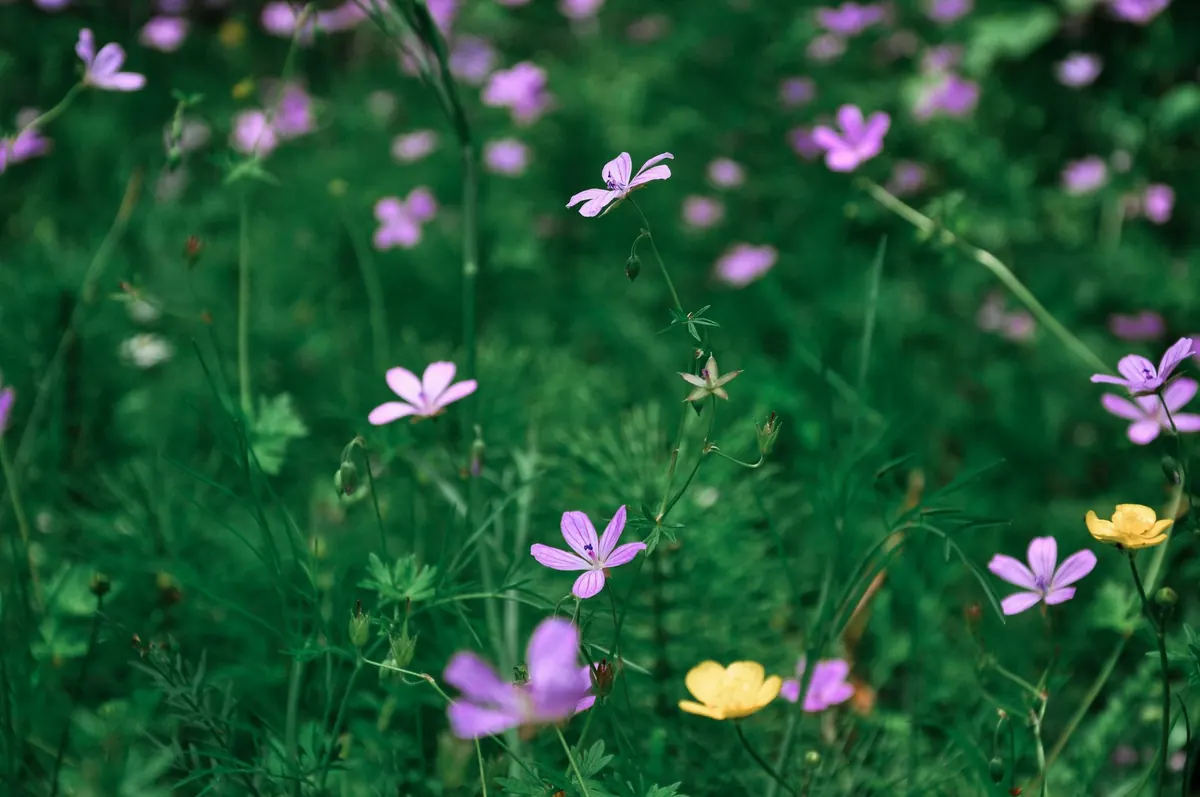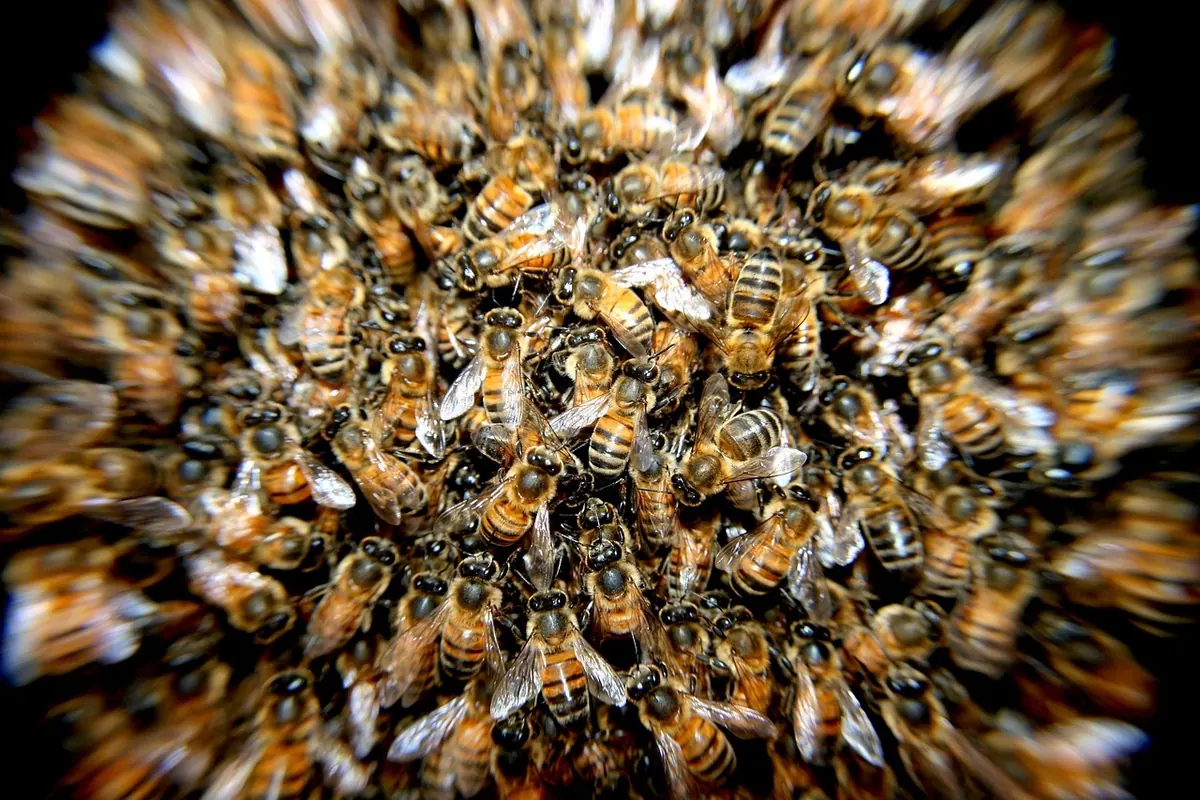
A good wildflower meadow is loud. Bees working the knapweed, a grasshopper flicking out from under your boot, ringlets tumbling through the taller grasses. That richness doesn't happen by accident, and the plants at the bottom of the food chain decide most of it. The native-versus-non-native question sounds academic until you're standing in a garden centre holding two seed packets that both promise a wildflower meadow, wondering which one the insects in your patch can actually use.
Why native wildflowers support more wildlife
British plants and British insects have shared the same ground for thousands of years. That shared history matters, because most insects are fussy. A caterpillar that has evolved to eat bird's-foot trefoil won't switch to a garden hybrid just because the hybrid is growing next to it. Many of our showiest garden plants offer nectar to adult bees and butterflies but nothing at all to the larvae that need to grow up somewhere.
Flowers are only part of the story. Leaves, stems, seed heads and hollow stalks matter just as much — they feed caterpillars, shelter overwintering insects and provide seed for birds such as goldfinches. A border of non-natives can look busy with bees in July and still support almost nothing through the rest of the year.
The specialists suffer most. Species tied to one or two native plants simply disappear from a site where those plants are absent. A native meadow doesn't just attract wildlife; it feeds the whole chain.
The honest case for non-native flowers
Non-native flowers are not the enemy. Plenty of them are first-rate nectar sources, and some will feed adult pollinators better than a native sown in completely the wrong spot. Lavender, oregano, Verbena bonariensis, single-flowered dahlias and cosmos will keep bees and butterflies going from midsummer into autumn, often later than native meadow flowers have finished.
In towns and cities this matters. If the alternative is paving, mown grass or double-flowered bedding that produces no nectar at all, a generous non-native is a clear improvement.
Two caveats. Choose single, open flowers — doubles and heavily bred cultivars often hide their nectar or produce none. And treat these plants as an addition to a garden rather than a substitute for a meadow. They support adults dropping in for a meal; they rarely support insects that live out their whole life cycle on the plant.
Where non-natives cause trouble
Problems tend to start in three places.
Invasive species. Himalayan balsam, Japanese knotweed, rhododendron and certain cotoneasters spread aggressively, smother native vegetation and are expensive to remove once established. In Great Britain, planting some of these species in the wild is an offence under Schedule 9 of the Wildlife and Countryside Act 1981. If you're working near a protected site, a watercourse or a nature reserve, check with the relevant environmental regulator before you sow or plant anything — the rules differ across the UK and it's a job for someone who knows the site.
Hybridisation. Native bluebells cross readily with Spanish bluebells planted nearby. The offspring are fertile and the genetic mix spreads. Once it's in a wood, you can't easily undo it. The same concern applies to other native species where cultivated or continental forms are planted close to wild populations.
Careless seed. Packets labelled "wildflower mix" or "bee friendly" may contain non-native species, cultivated forms of native plants, or seed of uncertain origin. For a garden border that's perfectly fine. Sowing it into a meadow beside a wild site is not. Read the species list on the back, not the picture on the front.
What "native" actually means in practice
Local provenance
For large-scale habitat creation, conservation bodies generally favour seed of local origin — collected from nearby populations of the same species. It's thought to preserve the genetic character that suits local soils and climate. For a garden-sized meadow, British-native seed is the main thing; local provenance is a bonus if you can get it.
Old acquaintances and newcomers
Some plants, such as cornflower and corn marigold, arrived centuries ago and are treated as part of our flora. Others, including many garden favourites, are recent introductions. Neither category is automatically good or bad — but the longer a plant has been here, the more likely something local has evolved to use it.
Building a planting plan that works
Start with the soil. Chalk downland species will sulk on heavy clay, and wetland plants will fail on free-draining sand, however native they are.
- Yellow rattle is the single most useful plant in a new meadow. It weakens grasses and opens space for flowers.
- Ox-eye daisy, common knapweed and field scabious give you height and months of nectar.
- Bird's-foot trefoil, red clover and yarrow are low-growing workhorses that tolerate close grazing and mowing.
- Selfheal, betony, ragged robin, cowslip and salad burnet fill the middle ground and flower in sequence.
- Wild marjoram is a native that behaves like a garden herb and pulls in butterflies through late summer.
Keep non-natives in a border beside the meadow, not in it. Choose single-flowered, non-invasive plants, and leave the seed heads standing over winter.
A practical approach for a British meadow
If wildlife is the priority, go native — ideally a UK-sourced mix matched to your soil, with yellow rattle included and a cutting regime of one late-summer cut with the cuttings raked off. Add a few non-natives at the edges if you want colour, but don't let them into the sowing.
Then be patient. A new meadow usually looks scruffy in year one, promising in year two and genuinely good in year three or four. Sow it, mow it, and leave it alone enough to let the insects find it.
Photo: RAHULKUMAR R / Pexels