Spring Meadow Maintenance Checklist: March to May
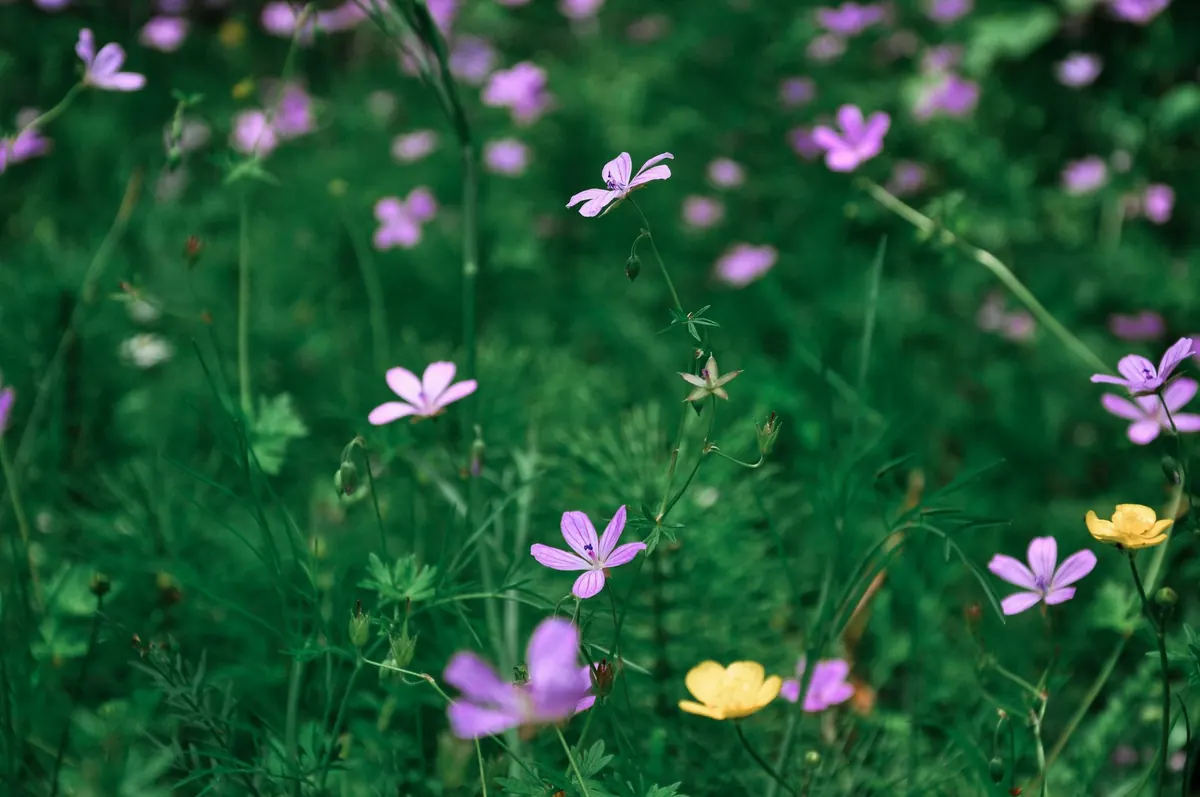
Spring in a wildflower meadow is a slow reveal. The grass starts moving in early March, rosettes of ox-eye daisy and knapweed flatten themselves against the soil, and by mid-April you can see exactly where last summer's sward thinned and where the docks found a gap. What you do between now and the end of May shapes the whole season. Ignore it, and you spend July fighting rank grass and seed heads.
Walk It Before You Work It
Go out once a week with a notebook or your phone camera. Photograph three or four fixed points so you can compare month on month. Look for bare ground, moss, mats of dead grass and seedlings you cannot name. Learn the difference between the plants you want and the ones you do not: selfheal, yarrow, birds-foot trefoil, ox-eye daisy and knapweed all start small and quiet next to a dock or a nettle.
Push a hand fork into the soil to check how wet and compacted it is. If the ground is cold and waterlogged, wait. Grass begins growing when soil temperatures reach roughly 7°C at root level, and scarifying before that does more harm than good.
Walk the edges, too. That is where creeping thistle, bramble and bracken sneak in. If you catch them as tiny shoots, a hand fork lifts them in seconds. Leave them until May and you will be cutting them back all summer.
Scarifying: How Much, and When
Scarifying removes the thatch — the mat of dead stems and moss that smothers seedlings and holds moisture against the crowns of your plants. Do it when growth is active, the soil is damp but not sodden, usually late March to mid-April in most temperate climates. Use a spring-tine rake or a scarifying rake, and work in one direction rather than scrubbing back and forth. On small meadows, rake by hand; on larger plots, a powered scarifier set high will lift the thatch without scalping. Aim to remove no more than a third of the top growth at once. If you expose wide patches of bare soil, you have gone too far.
Rake off the debris and add it to the compost heap, but leave a few small piles at the edge for insects and small mammals. Do not scarify if heavy rain is forecast, and do not scarify after mid-May. By then, ground-nesting birds, froglets and emerging pollinators need the cover. If your meadow is mostly moss, improve airflow by mowing nearby trees or shrubs rather than tearing at the moss with a rake.
Hand Raking vs. Powered Scarifiers
Hand raking is slow but precise. It lets you avoid the crowns of young ox-eye daisies and knapweed, which are easy to rip out by accident. A powered scarifier is faster, but it can scalp uneven ground and damage ant nests. Set the blades high for the first pass, then lower them only if the thatch is still thick. On clay soils, wait for a dry week; on sandy soils, scarify before the ground dries to dust. Either way, stop while there is still green growth below.
The First Cut: Mowing in Spring
Do not treat a wildflower meadow like a lawn. The first cut is about control, not tidiness. In March, if the grass is already long and the weather is mild, set the mower to its highest setting — 7 to 10 cm — and cut only the paths and the roughest patches. This lets light reach the rosettes without removing the cover that early solitary bees are using.
By mid-April, you can cut the whole meadow once if it is rank with grass. Use a high cut and leave the clippings for a day so seed heads can drop, then rake them up. Clippings add fertility, and wildflowers want lean soil. If you are not sure, cut half the meadow and leave the other half as a comparison. You will quickly see which half has more flowers in June.
In May, stop mowing unless you are managing a path. The meadow is entering its growing peak, and every cut removes food and shelter. If you must cut, do it in strips and leave at least a third of the area untouched.
“A meadow is not a lawn left to grow. It is a garden with a different rhythm.”
Weeding: Docks, Nettles, and Other Thugs
Spring is the best time to remove the plants that will otherwise take over. Docks, nettles, creeping thistle, ragwort and cow parsley are all easier to pull when the soil is soft after rain. Use a narrow spade or a hand fork to loosen the root, then pull steadily from the base. If you snap a dock root, it will regrow. If you leave a nettle rhizome, it will send up a new shoot within weeks.
Work in small patches rather than trying to clear the whole meadow in one day. Start with the plants closest to your wanted wildflowers, because competition is fiercest there. Nettles are valuable for butterflies, so keep a contained patch in a corner if you can. Ragwort is a native plant and supports the cinnabar moth, but it is toxic to livestock; if you graze the meadow, remove it by hand before it sets seed.
Do not use weedkiller in a wildflower meadow unless you are dealing with an invasive species and have taken specialist advice. Most spring weeds can be managed with repeated cutting and hand-pulling. Mark the spots you clear with a small stick so you can check for regrowth in a fortnight.
Plug Planting and Gap Filling
March and early April are ideal for planting plug plants of native wildflowers. Good choices for most meadows include ox-eye daisy, knapweed, cowslip, field scabious, yarrow and birds-foot trefoil. Plant them into gaps where grass is thin, using a bulb planter or a trowel. Firm them in, water them once, and keep the grass around them short for the first month so they are not shaded out.
If you have bare patches, you can sow a native seed mix, but do not expect instant results. Many wildflower seeds need a period of cold to germinate, and spring sowing is often slower than autumn sowing. Yellow rattle, the classic meadow-maker that weakens grass, is usually sown in autumn. If you sow it in spring, it may still germinate, but the results are less reliable. Do not add fertilizer or compost to the planting holes; rich soil favors grass and docks over wildflowers.
Watering, Soil, and What Not to Do
Established wildflower meadows rarely need watering in spring. The soil is usually still holding winter rain, and extra water encourages soft, rank growth. Newly planted plugs are the exception. Water them during a dry spell for the first few weeks, then taper off. If you have a long, hot April, water deeply once a week rather than little and often.
Do not mulch, do not feed, and do not dig the whole meadow over. Wildflower meadows are built on low fertility. Adding compost or manure will give you a lush green sward with few flowers. If the soil is compacted, fork it lightly in a few small areas and let the worms do the rest. If it is waterlogged, consider creating a shallow drainage channel or simply avoid walking on it until it dries.
April and May: A Month-by-Month Snapshot
- March: Walk weekly. Check soil temperature. Rake thatch only if growth has started and the soil is not sodden. Plant plugs. Remove early docks and thistles.
- April: Give the meadow one high cut if it is rank. Rake off clippings. Continue hand-weeding. Sow native seed in bare gaps if you have them. Watch for slugs on new plugs.
- May: Stop mowing. Stake tall plants if they are flopping. Thin overcrowded seedlings. Leave nesting cover. Photograph fixed points for comparison. Note first flowering dates.
Record, Compare, Adjust
Keep a simple meadow diary. Write down when you scarified, when you cut, when you weeded, and what you saw. Note the first bee, the first ox-eye daisy, the first orchid if you are lucky. Compare your photos from March, April and May. You will start to see patterns: the wet corner that always grows moss, the sunny bank where knapweed thrives, the path edge where nettles return every year.
That record is more useful than any general rule. A meadow is a long conversation with your soil, your weather and your local wildlife. The work you do from March to May sets the terms. Do a little often, leave room for the unexpected, and by midsummer the meadow will tell you whether you listened.
Photo: Karen F / Pexels